Dynamics discovery
Simulations are plentiful but idealized; measurements are real but sparse. The model learns governing operators from both, and keeps the known physics separate from what still has to be learned.
A generative model can draw a flow field that looks right and still fails to conserve mass. We are building models of physical systems that learn from data while keeping to the governing equations, and that say how far each prediction can be trusted.
Some models end up deciding whether a part gets certified or a well gets drilled. A model in that position has to agree with the physics and with the measurements, and it has to say where it is unsure.
Most systems are only partly observed: a few sensors, a coarse simulation, a satellite pass every few hours. We reconstruct the full state from those pieces and learn the operators that move it forward, including terms the textbook equations leave out.
Fitting the training data is no evidence that a model conserves energy or stays stable over a long rollout. We test each model against the structure of its equations, and prove the important properties where that is feasible.
The next design will have a new geometry, a different boundary condition or an operating point nobody simulated. A model that keeps the physics explicit has a chance of saying something useful there.
The governing equations stay part of the model from the first measurement to the final design. Conservation laws constrain what it learns, and generative methods give each forecast a spread, so you can see how confident it is.
Hover over a step to see what it does to a single signal.
Sensors, experiments, simulations and remote sensing each see part of a system, at different resolutions and with different noise. We encode them into one shared representation of the fields, the geometry and the boundary conditions.
From those partial views, reconstruct the full physical state. This is an inverse problem, usually an ill-posed one, so the regularization has to be chosen with care.
Learn the operator that advances the state in time. Known physics is written in directly, and the network fits only the residual, such as unresolved turbulence or an unknown constitutive law.
Check that the learned model conserves what it should, stays stable over long rollouts and is calibrated on held-out data. Where it is practical, prove the key properties as well.
Run the model forward. Flow matching evolves the state efficiently, and diffusion samples several physically plausible futures; the spread between them is the uncertainty.
Ask what happens with a different geometry or operating point, search for a better design, or close a control loop around the system.
The goal is a single generative model of physical dynamics, built from four parts. Each panel below is a small live example of the idea behind one of them.
Simulations are plentiful but idealized; measurements are real but sparse. The model learns governing operators from both, and keeps the known physics separate from what still has to be learned.
The dynamics are generative and constrained by the governing PDE. From a single starting state, the model can sample a whole family of physically plausible futures.
One set of Fourier circles can draw an airfoil, a droplet or a crystal. We want the same economy for physics: a learned representation of fields, operators, geometry and boundary conditions that carries over from one family of PDEs to the next.
Puts the model to work on what-if questions, inverse design and optimization. Later this becomes an agent that runs the full propose, simulate, evaluate and redesign loop itself, and that other AI systems can call as a tool.
Resolving every eddy in a flow is expensive, so most production simulations run on coarse grids. We want a model that takes a cheap coarse run and fills in the fine structure a full-resolution solve would have shown, without breaking the physics. Drag the handle to compare the two.
The panel is a stylized illustration of the goal, not output from one of our models.
In 1902 Jacques Hadamard called a problem well-posed if a solution exists, is unique, and changes continuously with the data. Inverse problems in practice tend to fail the last test: a little measurement noise can swing the answer wildly.
The panel shows a signal that was blurred and then measured with noise. The naive inverse undoes the blur exactly but amplifies the noise along with it. Each regularizer avoids this by assuming something about the answer: Tikhonov that its values are small, Wiener that it is smooth, total variation that it is flat except at a few sharp jumps, and L1 that it is mostly zero.
RealPosed grew out of two groups at UCLA. Andrea Bertozzi’s group has spent three decades on nonlinear PDEs, fluid dynamics and their use in data science. Wei Wang’s group works on machine learning for dynamical systems, from graph ODEs to diffusion models for fluid simulation. The company is an attempt to put both into one pretrained model.
Zheng Tan, Weizhen Wang, Andrea L. Bertozzi, Ernest K. Ryu
Xiaoxuan Wang, Han Zhang, Haixin Wang, Yidan Shi, Ruoyan Li, Kaiqiao Han, Chenyi Tong, Haoran Deng, Alexander K. Taylor, Renliang Sun, Yanqiao Zhu, Jason Cong, Yizhou Sun, Wei Wang
Ethan Ji, Yuanzhou Chen, Arush Ramteke, Fang Sun, Tianrun Yu, Jai Parera, Peipei Ping, Wei Wang, Yizhou Sun
Ruoyan Li, Zijie Huang, Haixin Wang, Guancheng Wan, Yizhou Sun, Wei Wang
Haixin Wang, Ruoyan Li, Fred Xu, Fang Sun, Kaiqiao Han, Zijie Huang, Chi Chang, Xiao Luo, Wei Wang, Yizhou Sun
Ruoyan Li, Guancheng Wan, Zijie Huang, Zixiao Liu, Haixin Wang, Xiao Luo, Wei Wang, Yizhou Sun
Hong Kiat Tan, Andrea L. Bertozzi
Annie Lu, Hong Kiat Tan, Alexander Xue, Alice Koniges, Andrea L. Bertozzi
Andrea L. Bertozzi, Peter Constantin
The approach fits any field where simulations are too expensive to run as often as needed, the equations are only partly known, or the measurements are sparse. Each card runs a small model from that field and responds to your cursor.
Turbulence and aeroelastic loads, and inverse design of shapes outside the range anyone has simulated or tested.
Subsurface flow for geothermal energy and CO₂ storage, plasma behavior in fusion devices, and state estimation on the grid.
Device physics, heat and electromagnetic fields in chips and packages, where coupled multiphysics runs take too long to use during design.
Thermal and mechanical change during a process, modeled well enough to close a control loop on the line.
Fracture and phase transitions across length scales, and constitutive laws learned from experimental data.
Atmosphere, oceans and wildfire, where satellites supply most of the observations and much of the physics is parameterized.
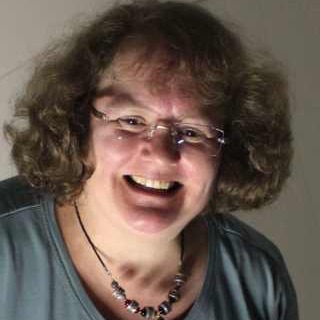
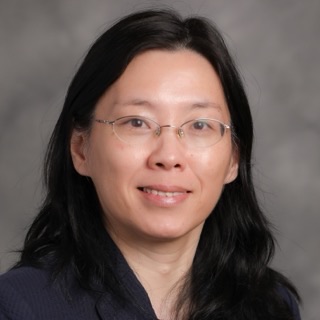
RealPosed was started by a mathematician and a computer scientist who have each spent a career on one half of this problem.

Co-founder and CEO
Distinguished Professor of Mathematics and of Mechanical and Aerospace Engineering at UCLA, and a member of the National Academy of Sciences. Across more than 330 papers, Bertozzi’s work ranges from the analysis of nonlinear PDEs and fluid dynamics to scientific computing and data-driven modeling. Simons Math+X Investigator; Fellow of AMS, SIAM, APS and the American Academy of Arts and Sciences.

Co-founder and President
Leonard Kleinrock Chair Professor and Chair of Computer Science at UCLA, and Director of the Scalable Analytics Institute. Wang has published more than 400 papers in machine learning, scalable AI and AI for science, and leads a $5M DARPA program at UCLA. Fellow of ACM and IEEE; 2026 ACM SIGKDD Innovation Award.
We are assembling the founding team, with roles in PDE analysis, numerical methods, machine learning systems and application areas such as energy and aerospace.
Not well-posed. Not ill-posed. Real Posed.
Real as in real analysis, posed as in Hadamard. The problems engineers actually face rarely fit either textbook case.
Hadamard’s three conditions
A PDE-grounded world model that learns dynamics from data and still holds up when moved to a different physical regime.
Every model comes with the checks that justify it, and its most important properties are proved formally where that is feasible.
At accuracy an engineer would accept, including on geometries and boundary conditions the model has not seen.
Benchmarks developed with national laboratories and industrial partners, so results are measured on their problems and not only on ours.
These are goals, not results we can show yet.
We are looking for a few engineering teams and national laboratories to work with on early benchmarks. If your current simulations are too slow or too crude for the decisions you have to make, we would like to hear about it.